The Curious Garden Learning Activities for PreK-2
5 Ready-to-teach activities that bring biological science, Literacy and maths to life.
Download today. Teach tomorrow. No packaged curriculum required.

5 Ready-to-teach activities that bring biological science, Literacy and maths to life.
Download today. Teach tomorrow. No packaged curriculum required.
The Curious Garden by Peter Brown is the kind of story that makes children want to dig in the dirt, ask questions about what’s growing, and wonder how one small act of care can change an entire world.
This learning activity gives you everything you need to turn that spark into a full week of meaningful, hands-on learning — without spending your time searching for activities on Pinterest.
It’s only AU$6 for ready to go, hands-on activities that children will love. It’s ready to print and use tomorrow.
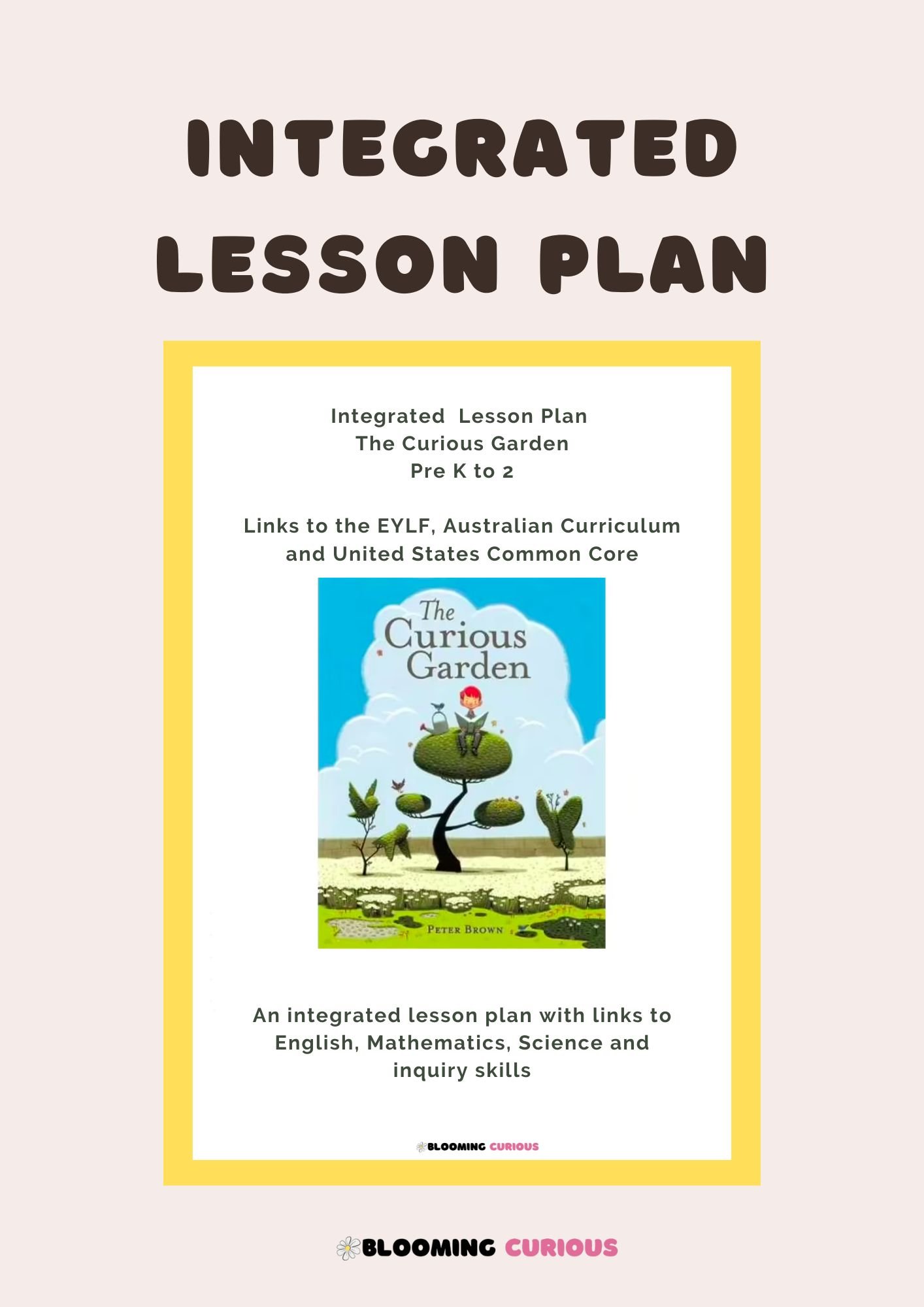
This is a complete, ready-to-implement activity pack that transforms The Curious Garden into an immersive learning experience, where your Pre K-2 learners become scientists, explorers, and environmental champions, all while actually learning, and meeting curriculum requirements.
Subject areas covered: Biological Science, English Literacy, Mathematics, Visual Art, Digital Technologies, Sustainability
Click here to see the complete resource.
If you've ever wondered about what activities to do after reading a picture book to your children, then this learning activity pack will show you exactly how it's done.
Finding the time to design activities that genuinely teach children how to think like scientists and inquirers — is one of the hardest parts of teaching.
And if you’re new to curiosity-led learning, it can feel a bit daunting.
How do you introduce the process in a way that’s age-appropriate? How do you keep 5- and 6-year-olds genuinely engaged for more than 10 minutes? How do you make sure you’re still meeting curriculum requirements to keep moderators happy?
This plan lays it all out for you.
You'll get:
• 5 complete learning experiences — each with clear objectives, step-by-step procedure, curriculum links and a full resource list. Lessons build on each other across a week (or longer — the learning keeps going as the garden grows).
• A child friendly learning journal — 11 activity pages children work through as the unit progresses. Includes story sequencing, procedural writing, plant predictions, observation grids, a garden visitor page, and an investigation planner. Print it as a booklet or select individual pages.
• Two assessment rubrics to track understanding — one covering engagement, inquiry skills and collaboration; the other covering science understanding, literacy and mathematical thinking. Four levels from Beginning to Exemplary. No need to design your own.
• An inquiry skills framework — aligned to Next Generation Science Standards, showing exactly which inquiry skills each activity develops and how.
• A step-by-step introduction to structured inquiry — ideal if this is your first time incorporating inquiry. You’ll know exactly how to set up, how to support children’s questions, and how to lead the process together.
• Extension ideas — including macro photography, pollinators, cooking from the garden, digital technology and more, so the learning can go as far as you would like to take it.
PLUS
Curriculum links for three frameworks — EYLF, Australian Curriculum and US Common Core. Every lesson is mapped. You can justify every activity to your moderator.

This learning experience is for any PreK-2 setting — homeschool learning, mainstream classrooms, nature schools, or early childhood centres.
It works equally whether you’re an experienced inquiry practitioner looking for a structured unit, or someone wanting to bring inquiry into children's learning.
It's brilliant for homeschool families who want a learning experience their child will love, and moderators approve of.
Most lesson plan templates online give you a framework and leave you to fill it in. This one is fully written, fully resourced and fully mapped to curriculum.
The inquiry process is explicitly taught — not assumed. The activities move from reading and discussing the story, to getting outside and exploring, to planting, observing, measuring and reflecting.
And because the garden keeps growing, the learning doesn’t stop at the end of the week.
Children don’t just learn about plants. They learn how to ask good questions, how to make careful observations, how to record what they notice, and how to connect what they’re seeing to the real world.
Those are skills that last well beyond schooling.
No. The lesson plan walks you through exactly how to introduce structured inquiry for the first time, including how to set up an inquiry wall and scaffold children’s questions.
No. The lessons work with pots on a windowsill, seeds in a cup, or a walk around the school grounds. What matters is giving children something living to observe and care for.
Yes, absolutely — the existing testimonial is from a homeschool parent. The activities work just as well one-on-one as in a classroom.
EYLF (Early Years Learning Framework), Australian Curriculum, and US Common Core. Every lesson is mapped to all three. However the ideas and activities will work in any curriculum that covers biological sciences/living things.
Yes, you will need a copy of the picture book. It's available at any reputable book store, library or on-line.