

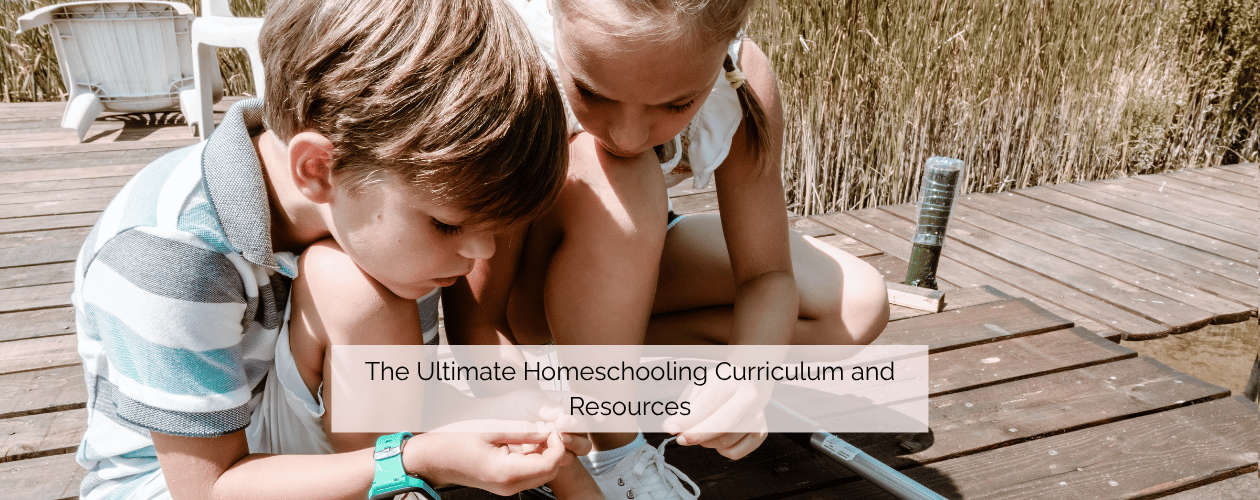
You're looking for the ultimate Pre K-2 homeschooling curriculum and resources. What if I told you that the perfect curriculum is staring you in the face? You might not realise this, but you don't actually need to go off and purchase a boxed curriculum to teach young children. The curriculum content is all around you. You just need to know how to see it and what to do with it.
What no one will tell you, is that you need to invest in your own training and teaching skills if you want to teach.
Teachers spend years learning about teaching strategies, brain science, child development, how to teach numeracy, and reading and writing strategies, before they get to teach in their own classrooms.
And after day one of being in a classroom, you realise that although you know the theory, nothing prepared you for an actual classroom with real children, all with different needs.
So what do teachers do? Those that care anyway. They start to do research.
Of course the best way to learn, is TO DO the thing. You learn on the job.
And you also learn from others.
I found YouTube a treasure trove of information. I also read blogs, and discovered experts I wanted to learn more from. People like Dr Claire Warden whom I interviewed on the podcast.
The right curriculum for your child
You probably pulled your children out of formal schooling because you thought you can do better than what they're getting in a mainstream classroom.
From what I can see as a homeschool tutor, many parents are drowning in the deep end.
Some are qualified teachers, and feel confident enough to teach their own children.
Others are getting themselves organised into co-ops where subject experts are teaching children in their field of expertise.
And others are frantically searching the internet at midnight trying to find the right curriculum for their child.
But after teaching on 3 different continents with four different curricula, I can tell you that apart from all curricula covering more or less the same content, there isn't a curriculum on the planet that can cater to the exact needs of YOUR child.
PLUS a curriculum is only as good as the person delivering it.
A curriculum simply gives you the structure of what to teach. Many also give you the workbooks, worksheets and texts you need to cover each lesson.
This year I started tutoring homeschool children in the classical tradition. We use a classical curriculum - which I would argue is the richest curriculum in the world, because it teaches rhetoric ( the art of effective or persuasive speaking and writing).
But here's the thing.
Even though I do have an outline of a curriculum to follow, I ventured off the path months ago.
Why?
Because although I like much of the curriculum, I know what I'm doing, and I know what children need, and I follow the interests of the children - whilst keeping to classical traditions.
So I have the structure, but the HOW I teach it is totally my own, based on years of experience and my values...which just happen to align with Classical Education and Charlotte Mason...which I never even realised.
Top tips for when you're new to homeschooling
- Reflect. Why do you want to teach your children? What do you believe is important? What do you want for your children? What are you good at? Where do you need help? What type of learning philosophy do you resonate with? Classical, Charlotte Mason, Montessori, Reggio Emilia?
- Start educating yourself. When you're learning, your children notice. They see what learning looks like. They learn from you that learning is important. The Curiosity Toolkit might be the perfect starter for you. Reading Charlotte Mason's book Home Education would also be a really good move.
- Use high quality picture books to drive your learning experiences. Children love stories, so find stories that link to what they're learning. Use the stories to lead your teaching. Check out the learning experiences I have created using the picture book I Went Walking. It's FREE. Download it here
- Find a rhythm that works for you and your family. Children thrive when life is predictable. Boundaries and schedules work wonders, especially once children know what is expected of them. I usually start the day ( as all Classical Schools do) with a Bible story and a narration - where children retell the story you just read in their own words. Phonics follows this ( about 5 minutes), then a story, and our activities related to the story. Then a snack and break outside followed by counting and some kind of numeracy activity, and then outdoor exploration and play.
- Remain flexible. Even though you have a rhythm, also read the room. If children are tired, instead of doing some busy activity let them watch a National Geographic video on the topic, or get out of the house and go to a zoo or a museum where learning will also happen.
- Try before you buy. Figure out how you will best operate. If you like flexibility and you want your children to work on projects, then a rigid curriculum box might not be the best option. You might want to purchase seperate themed activities, like my picture book experiences which favour hands-on learning, and they include experiences across multiple subject areas. On the other hand if you prefer structure and a more rigid approach, then perhaps a boxed curriculum might be the right choice.
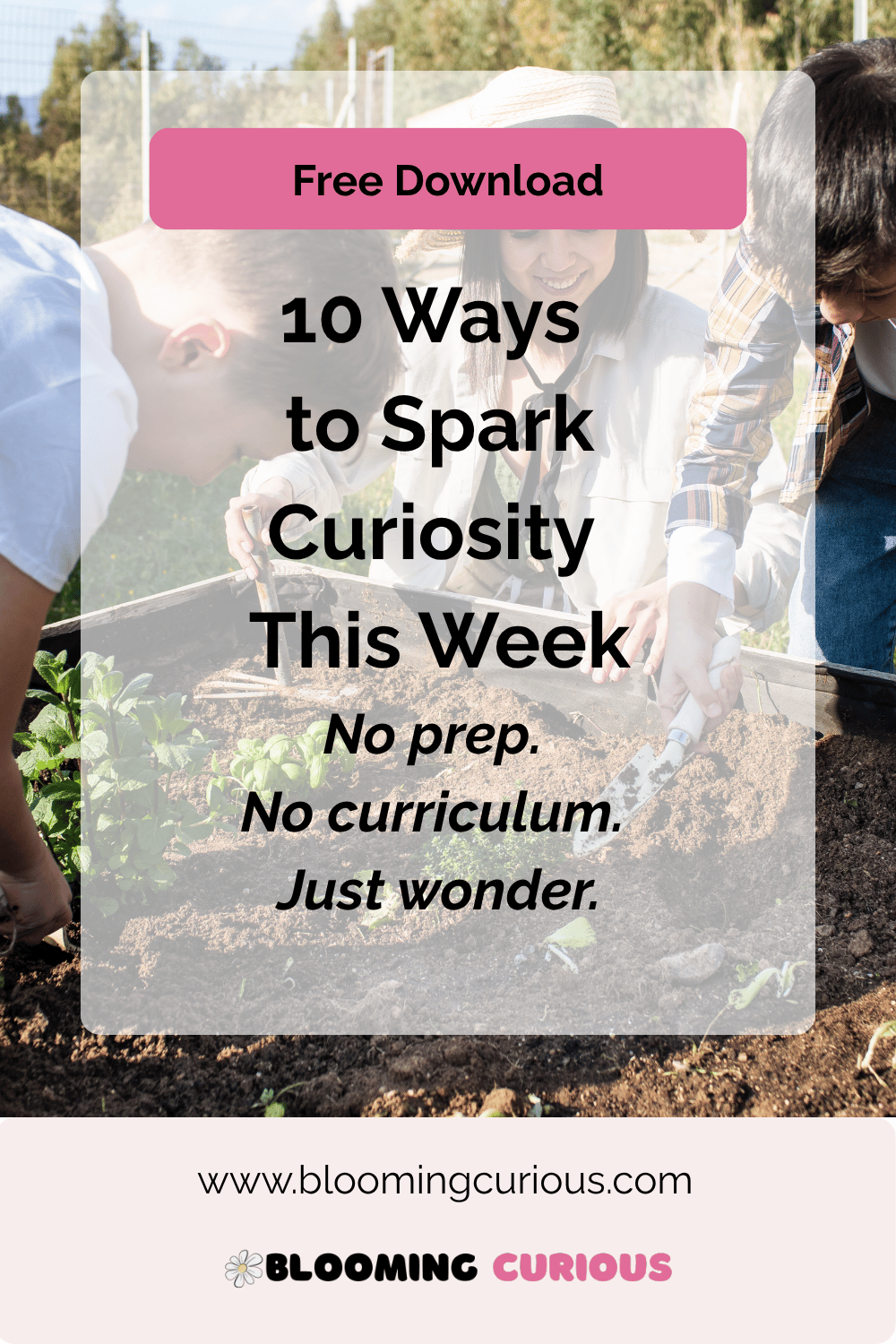
Not sure where to start? Grab 10 Ways to Spark Curiosity This Week — no prep, no curriculum required and experience how you can get started with some easy prompts.
Like all things that are worth doing, deciding to homeschool and teach also requires some planning and setting yourself and your children up for success.
Where do you start?
If all this has you nodding along but also feeling a little overwhelmed — start small.
You don't need to overhaul your whole approach this week.
You don't need to buy a curriculum plan, or a laminator. Nor do you need a Pinterest board full of ideas you'll never get to.
You just need one small shift: notice something, and get curious about it out loud, in front of your child.
To help you do exactly that, get 10 Ways to Spark Curiosity This Week — no prep, no curriculum, just wonder. Ten simple, doable moments you can drop into the week you're already having and see how it feels to teach simply and naturally, in those teachable moments. Download you free copy below.
You are the curriculum. This is just your starting point.
P.S. If you want more support once you've got the hang of it, Curiosity Without Chaos walks you through building this into a rhythm that actually works — and our Facebook community is a good place to ask questions and see what this looks like for other families.
Comments ()